

How I Got Started in AI
From Back Office to Building: A Non-Technical Path Into AI

I spent the better part of eight years doing work that had nothing to do with AI. Sales, business development, operations, HR, recruiting. If you looked at my resume in 2022, there was no line on it that would suggest I’d be building AI solutions for federal agencies a couple years later.
That question comes up a lot now. “How did you get into AI?” People expect some computer science background or a pivot from data science. The real answer is less glamorous: I was processing Excel spreadsheets for the federal government and got tired of doing the same thing three times.
But I’m getting ahead of myself.
The Setup Nobody Plans For
For years, I helped grow Sky Solutions. I was in senior leadership, handling BD, client relationships, the whole growth engine. The work was good, but it came with constant travel. Every other week, I was somewhere else. And after a while, that starts to break things at home.
Between the travel and some personal and family realities I was navigating, I made the call to step down from senior leadership and move into a remote role. That’s not a decision most people talk about publicly, but it was the right one. I needed to be home more. Period.

Here’s where I got lucky. My CEO at Sky, who is also a close friend and mentor, had my back. He didn’t just tolerate the transition. He supported it. He moved me into a program support role that was more technical and fully remote. I will never stop being grateful for that. That kind of leadership is rare, and it changed the trajectory of everything that followed.
Starting Over, On Purpose
I’m not someone who thinks I’m too good for any role. Wherever you land, there’s something to learn. So when I moved into the program, I started from the bottom as an analyst. My experience with clients, communication, and always looking for ways to optimize things helped. But functionally, I was new.
And what I found was... a lot of Excel.
The federal government moves slow when it comes to adopting technology. So the workflows I inherited were manual, spreadsheet-heavy, and repetitive. After processing my third or fourth one the same way, something clicked: there has to be a better way to do this.
A quick Google search introduced me to VBA, Visual Basic for Applications, and Excel macros.
The First Spark
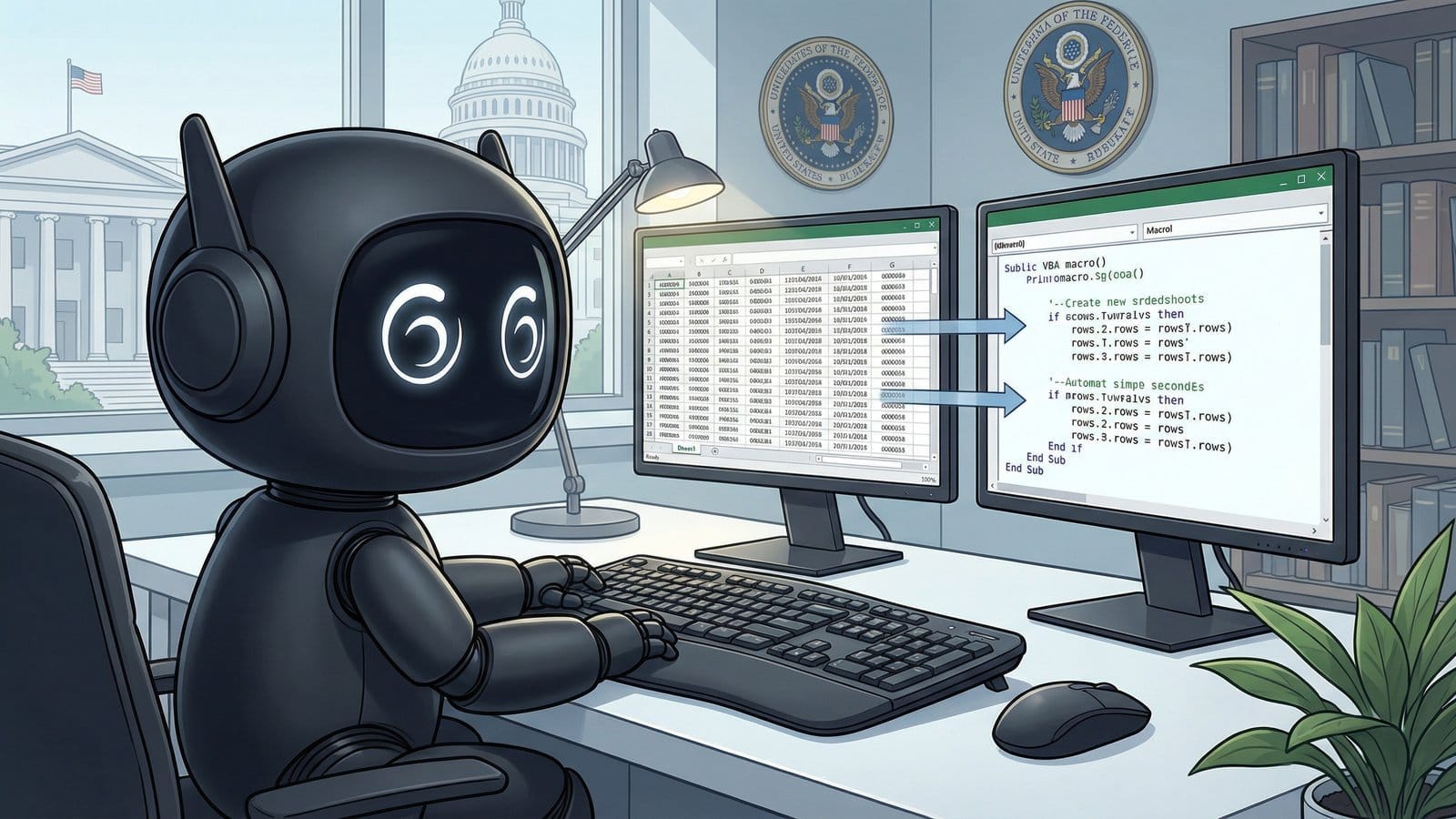
Those first few macros took forever. I didn’t know how to code. I could read syntax well enough to reverse-engineer what was happening, but writing it from scratch? That was all trial and error and a lot of tabs open on Stack Overflow.
Then I remembered something my brother had told me. He’d been talking about AI and LLMs before ChatGPT went mainstream. At the time, I brushed him off completely. I thought, “There are no shortcuts. This stuff isn’t real.” I was wrong.
Out of curiosity, I opened Claude and described what I needed in plain English. “If column B equals this value, move the row here and flag it.” And it gave me working VBA code that I could drop into a macro.
What used to take me hours of Googling and debugging, I could now produce in minutes. My productivity went through the roof. The macros I built let me process work faster than anyone else on the team, and with zero errors. That output and quality quickly moved me into a lead role.
That was the moment I stopped being skeptical and started paying attention.
From Chatbot to Automation
I didn’t stop at macros. I wanted to understand what else AI could actually do. Not in theory. In practice.
That’s when I found n8n, a low-code, no-code automation platform. It clicked immediately. My company had been doing low-code work with Pega, ServiceNow, and Appian for years. This was in my wheelhouse.
What made n8n different was that it made agent-level thinking visual. You could see the flow: the nodes (reusable chunks of pre-built logic), the tools (API calls), and how an agent was structured with memory, tools, and the LLM. It took AI from “tell me what to do” to “go do it.” That shift was massive for me.
I spent a lot of my free time learning, mostly on YouTube. Shoutout to Nate Herk, who was a big part of my early education. But I’ll say this: if you go the YouTube route, be careful. There’s a ton of clickbait and hype out there. My years in BD and sales actually helped here. I got good at filtering signal from noise fast.
My approach was always the same: start with a problem, then learn whatever I need to solve it.
Building for Real
I built my first POC and demo for the federal agency I was supporting. Within a few months, I was moved up to lead an entire subtask. I consolidated four separate work streams into one and led it as a technology lead.
Technology lead. After six-plus years in ops. That still hits different when I think about it.
Around this time, my brother and I tried to start a company together called Werpa Inc. I learned a ton, especially on the marketing and product side. He came from the bootstrap solopreneur world, and I came from services. We were just heading in different directions. It didn’t work out as a shared venture, but we still collaborate today in different capacities. No hard feelings. Just different lanes.
I ended up starting my own company, Galang AI, to put all the knowledge I was accumulating to work. Helping people solve real problems, not chasing trends.
When my current company decided to move in an AI-first direction, we had to set some boundaries and agreements. But because the CEO is someone who genuinely wants to see me succeed, we handled it easily. In return, I’ve built demos, AI solutions, and helped them transition toward becoming an AI-first company. It works because the relationship is built on trust.
The Barrier I Didn’t Expect to Break
I thought n8n was my ceiling. Seriously. I figured I’d be the guy who blueprinted automations on the platform and then handed things off to a “real developer” to code it in Python.
Then agent-first IDEs and CLI tools started dropping. Google released Firebase Studio. I discovered Claude Code CLI, Codex CLI. And here’s the thing: the command line wasn’t scary to me. I’d been staring at terminals for years because of my self-hosting hobby, deploying containers, configuring environment variables, managing my own servers. That background quietly set me up for this next step without me even realizing it.
So I made the jump. And it was easier than I expected.
Full-Cycle Now
Today I can handle the full cycle. I generate PRDs, evaluate tooling, identify what actually matters for users and use cases, build the app, and deploy it securely.
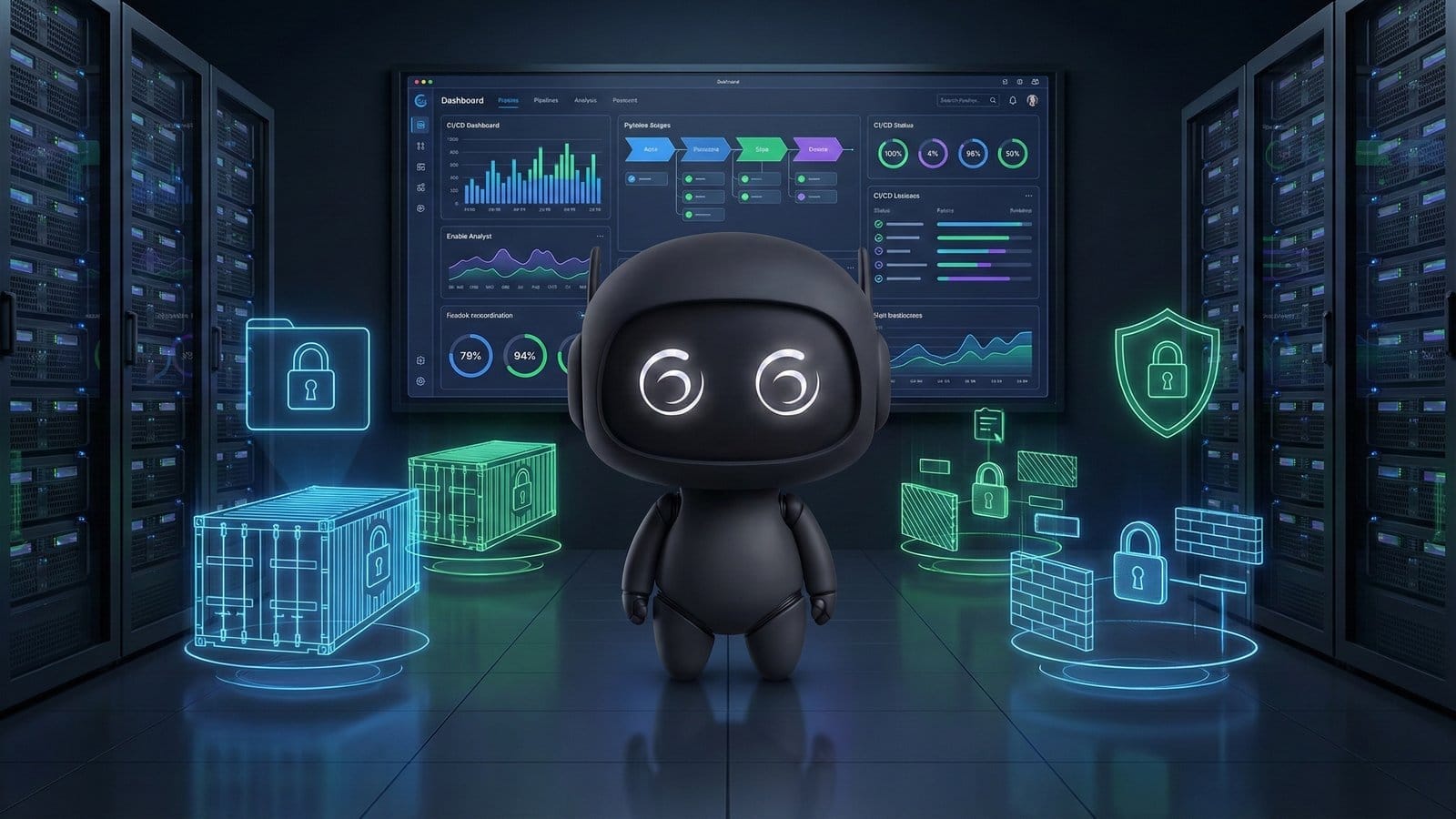
That last part matters. Working in the federal space drilled security into my thinking. Zero Trust concepts, least privilege, runtime secrets, containerized and isolated environments. I don’t build things and hope they’re secure. I build them with that baked in from the start.
On the infrastructure side, my self-hosting background means I run my own repositories and platform services. I use Coolify to spin up demos fast. If something needs to go to production on the commercial side, I migrate to Vercel or a similar platform. If it’s federal, we have controlled environments for that, and the migration is just as clean.
What I Actually Think About All This
I do think my path is somewhat unusual. Not many people get to see this field from the ops side, the BD side, the federal compliance side, and the technical delivery side. Each one of those angles gives me context that pure technologists sometimes miss.
I’m thankful for my mentor Anil at Sky Solutions for giving me the opportunity that started all of this. I’m thankful for my family’s patience while I poured hours into learning. My wife pointed out, accurately, that I spent a lot of time on this. She’s right. It took real work. It’s just that when something becomes your hobby, the hours don’t feel heavy.
Today I can deliver above and beyond for clients, maintain a real work-life balance, spend time with my family, work out every day, and still have energy for passion projects and continued learning. I’m set up to safely experiment with what’s next, whether that’s the latest agent frameworks or the infrastructure patterns that will define the next wave.
If you’re interested in getting into this space, I’m happy to help. Just know it takes work. Real work. There’s no shortcut, even with AI. The difference is that the work compounds faster now than it ever has before.